DNV 2.7-1 or DNV 2.7-3?
You need to send equipment offshore. It has to be lifted, transported and handled safely — but does it belong under DNV 2.7-1 or DNV 2.7-3?
The difference matters. Choosing the right standard starts with understanding what you are actually building and how the unit will be used.
DNV 2.7-1 — Offshore containers
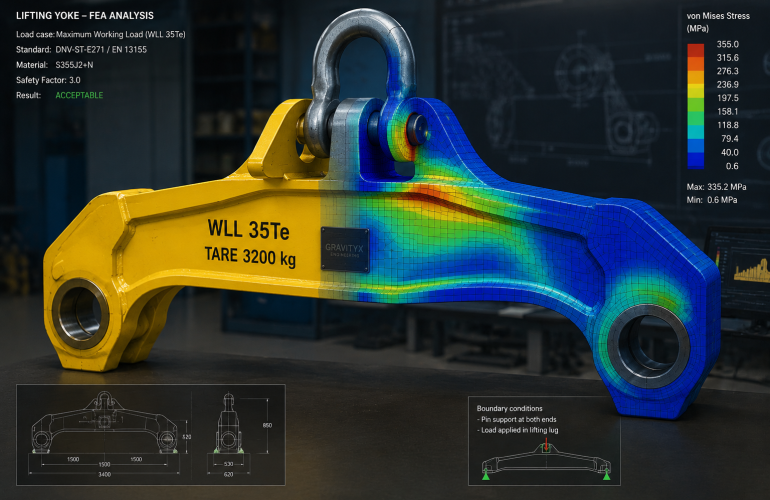
DNV-ST-E271, commonly known as DNV 2.7-1, covers offshore containers and their lifting sets.
Think transport first. The unit is fundamentally a container intended to carry cargo or equipment offshore, where it will be exposed to repeated lifting and handling between shore, supply vessels and offshore installations.
The standard addresses the complete route to certification, including design, manufacturing, testing, marking and periodic inspection.
DNV 2.7-3 — Portable offshore units
DNV-ST-E273, or DNV 2.7-3, covers portable offshore units — often shortened to POUs.
Here, the unit itself is typically the equipment. A skid, machinery package or other purpose-built unit may need to be transported and lifted offshore, but its primary function is not simply to contain cargo.
That distinction can affect how the structure, lifting arrangement, documentation and certification strategy are approached.
Start with the equipment — not the number
A steel frame with four padeyes does not automatically become a 2.7-1 container. And calling something a “skid” does not automatically make it a 2.7-3 unit.
The intended function, configuration, operating environment and offshore handling need to be understood first. For unusual equipment, defining the certification basis early can prevent the project from progressing around assumptions that later have to be revisited.
The expensive question is often asked too late
Imagine that the mechanical concept is already established. Main dimensions are fixed, equipment has been selected, the frame is being detailed and someone finally asks:
“This needs to be DNV certified. Which standard are we using?”
That question can affect more than the certificate at the end of the project. The applicable requirements can influence structural calculations, materials, welding documentation, lifting points, testing, inspection and the documentation that must follow the unit.
This is why compliance should be part of the engineering basis rather than something added after fabrication drawings are finished.
GravityX can take the project from that first classification question through engineering, fabrication, testing and certification coordination — bringing the required disciplines and manufacturing capacity into one project team.
See how it works | Get in touch