Your Drawings Are in Inches. Production Is in Europe.
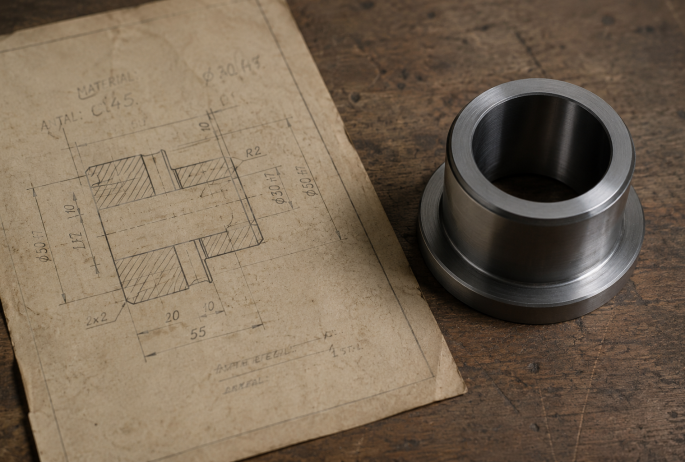
You have the drawings. The design is proven. The equipment may already have been manufactured several times in the US.
Then the project moves to Europe.
Suddenly, something that looked like a straightforward fabrication job becomes an engineering question. Plate thicknesses are specified in fractions of an inch. Structural sections follow American profiles. Bolts, threads, pipe sizes and purchased components may be based on US standards.
Converting the dimensions is easy.
Making the design practical to manufacture in Europe is not.
25.4 mm may be correct — but not useful
One inch is exactly 25.4 mm, so converting a dimension mathematically is rarely the difficult part.
The problem is what that dimension represents.
A US drawing may specify material, profiles, fasteners or components that do not have a direct European equivalent. Simply converting every dimension can leave the workshop with technically correct drawings for materials and components that are difficult to source locally.
Changing a thickness can change more than the drawing
If a specified plate thickness is not readily available, selecting the nearest metric thickness may seem obvious.
Sometimes it is.
But where the dimension affects strength, weight, interfaces, machining, tolerances or certification, the substitution needs to be considered properly. A drawing conversion can therefore become a small engineering exercise rather than an administrative drawing update.
The workshop needs drawings it can actually build from
Fabrication should not start with the workshop interpreting what the designer probably intended.
Questions around material equivalents, weld details, threads, tolerances, bought-out components and interfaces should preferably be resolved before they reach the shop floor.
The objective is not simply a metric drawing.
It is a European manufacturing package.
John Steinar Olsson
CEO, GravityX
This Is Not Really an Inch-to-Millimetre Problem
Imagine receiving a complete fabrication package from the United States.
The customer wants the equipment manufactured in Europe, and at first glance the job appears simple: convert the drawings from imperial to metric and send them to the workshop.
But consider a plate specified as 3/8 inch.
The mathematical conversion is 9.525 mm.
That does not automatically mean someone should revise the drawing to 9.525 mm and release it for fabrication. The engineering question is whether the original design requires that exact thickness, or whether an appropriate commercially available metric plate can be selected instead.
The same issue can appear throughout a fabrication package.
Structural profiles may need European alternatives. Imperial fasteners and threads may create unnecessary sourcing problems. Purchased components may have different mounting dimensions. Material specifications may need suitable equivalents. Pipe and flange designations require particular care because nominal sizes are not necessarily literal dimensional conversions.
And then there are the interfaces.
A small dimensional change may be irrelevant on an isolated bracket but important where the equipment connects to an existing structure, bearing, shaft, cylinder, motor, piping system or other customer equipment.
This is why a good conversion starts by separating dimensions that can simply be converted from design decisions that need engineering review.
The goal should be to preserve the design intent while making the equipment practical to manufacture using European materials, components, standards and fabrication methods appropriate to the project.
That may involve reviewing the original drawing package, identifying imperial specifications that create manufacturing or procurement issues, proposing suitable metric alternatives, checking affected interfaces and updating the fabrication documentation accordingly.
For an international customer, there is another practical advantage to handling this before fabrication starts: the workshop receives a package prepared for the environment in which it will actually manufacture the equipment.
Fewer questions need to travel back across time zones. Procurement can work from locally relevant specifications. Engineering decisions can be resolved before they become workshop delays.
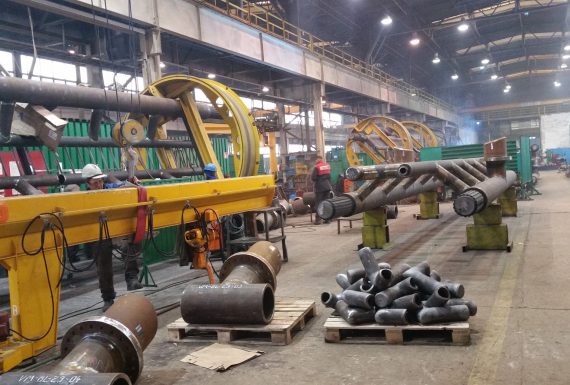
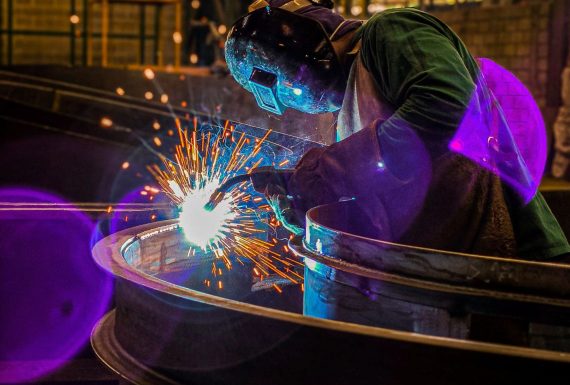
GravityX can take that package from US drawings through engineering review and adaptation to European fabrication — and, where required, continue through procurement, manufacturing, testing, documentation and delivery.
You already have the design.
The challenge is making it buildable here.

We challenge every price!

We challenge every solution!